THANK YOU FOR JOINING US
Help shape the next Bridging Horizons
Share your experience in our short post-event survey, then visit the conference photo gallery.
BELONGING · OCTOBER 1–2
Find your next session, choose a breakout, and know where to go.
Program PDFs & venue map ↓YOUR CONFERENCE COMPANION
THANK YOU FOR JOINING US
Share your experience in our short post-event survey, then visit the conference photo gallery.
DAY 1 · THANK YOU!
Thank you to the more than 3,000 people who made Day 1 of Bridging Horizons a success! To our attendees, self-advocates, families, presenters, vendors, volunteers, and community partners: thank you for showing up, sharing your experiences, and creating a place where everyone belongs.
We look forward to another day of learning, connection, and celebration on Friday, October 2. Check the Day 2 schedule and save your sessions before you arrive.
Keep sharing your conference moments! Tag @bridginghorizonsconference on Instagram and use #BridgingHorizon2026.
SEPTEMBER 30, 2026 · KICKOFF THANK-YOU
Thank you to the nearly 400 people who joined us for the kickoff party! We loved starting Bridging Horizons together.
Share your conference photos! Tag us on Instagram at @bridginghorizonsconference and use #BridgingHorizon2026. We can’t wait to see the conference through your eyes!
WEDNESDAY, SEPTEMBER 30, 2026
2:00 PM · Vendor check-in and booth setup
Marketplace and Community Resource vendors must check in at the Fresno Convention Center at 2:00 PM to set up their booths.
By 5:00 PM · Finish setup and leave
Please complete your booth setup and plan to leave the Convention Center by 5:00 PM.
6:00 PM · Kickoff at Tioga-Sequoia
Join us to kick off Bridging Horizons!
September 18, 2026 · Guide update
Doors open at 8:00 AM; registration is at the main entrance. Lunch is on your own, and conference Wi-Fi is unavailable. The Main Help Desk is in the main lobby between Halls 2 and 3. Visit the Help Desk for interpreters, first aid, and lost and found. The venue map and Marketplace / Art Gallery booth assignments are available. View the map or explore exhibitors.
Check this section for conference updates. Refresh the guide for the latest published information.
Conference times are shown in Pacific Time (Fresno). This view follows your device clock and the published schedule.
For events without a published end time, only the start is shown. Confirm on-site changes with staff.
Use “Save to my plan” on sessions and events below. Your selections stay in this browser on this device.
No sessions saved yet. Browse Day 1 or Day 2.
Saving does not reserve a seat or register you for CE credit. Read CE instructions. Overlap checks use published times; some event end times are not supplied.
October 1–2, 2026 · Fresno Convention Center and Valdez Hall.
Review parking, entrances, and the venue map. Save the conference PDFs and booth layout on your phone before you leave.
Parking structure: $5. Parking is not free.
Doors open at 8:00 AM. Registration is at the main entrance. Conference admission uses a wristband, not a badge. If you have not registered, you can register at the registration table.
Allow time to check in before your first session, and bring a charged phone if you plan to use the guide.
Free Bridging Horizons drawstring bags are available to all conference goers.
Breakfast: Refreshments and pastries are served each day.
Refreshments & snacks: Stations are available on both floors of the Convention Center.
Lunch: Day 1 at 12:30 PM; Day 2 at 12:00 PM.
Lunch is on your own. Enjoy one of the local restaurants in the area. Check hours, prices, and dietary options with the restaurant.
No conference Wi-Fi is available. Save maps and program PDFs before arriving. The restaurant map and other online features require a mobile data connection.
Open nearby restaurants in Google Maps ↗
Convention Center sensory room: Room 2013, 2nd floor. Find it on the venue map.
Valdez Hall sensory space: Available for the dance and gala.
Captioning: Captions will be turned on for presentations that are broadcast.
Interpreters: Visit the Help Desk for assistance.
Mobility assistance: Visit the Help Desk to request assistance.
Accommodation requests: For possible accommodations, visit the Main Help Desk in the main lobby between Halls 2 and 3. Share the support you need with the team.
Visit the Main Help Desk in the main lobby between Halls 2 and 3, or ask a staff member or volunteer in a blue shirt for assistance.
Main Help Desk: In the main lobby between Halls 2 and 3.
BH Help Desk in the fair: Main Hall, booths 15–16. Open the booth directory and choose the Help Desk shortcut.
You can also look for staff and volunteers in blue shirts.
Lost and found: At the Help Desk.
Merchandise table: In the lobby.
Free HCBS Rights posters for vendors: Available at the BH booth in the Marketplace.
First aid: At the Help Desk.
Contact our team: Visit the Main Help Desk for questions or assistance.
For an emergency, call 911 and alert venue staff.
Day 1 · October 1 · Room 2008
Extended session · 3:45–5:45 PM
DSPs attend the first hour, 3:45–4:45 PM (1 hour). Anyone who supervises others attends both hours, 3:45–5:45 PM (2 hours total).
Improving Organizational Safety Outcomes by Cultivating Positive Workplace Culture
Day 1 · October 1 · 11:15 AM–12:15 PM · Room 2002
Day 1 · 10:00–11:00 AM · Room 2005
Day 1 · 11:15 AM–12:15 PM · Room 2012
Day 2 · 10:00–11:00 AM · Room 2004
Krystall Rollins, MSW; Julian Elliott & Erica Graff · Department of Developmental Services
Day 1 · 10:00–11:00 AM · Room 2016
Jennifer Parsons, DDS and Omar Flores, CVRC
Day 1 · 11:15 AM–12:15 PM · Room 2004
Jean Martens · CVRC
Day 1 · 11:15 AM–12:15 PM · Room 2008
More presenter handouts and slides will be added as they become available.
Session evaluations and conference survey: Take the post-event survey and continue to the conference gallery →.
View current CE-credit instructions. Ask at registration which evaluations and attendance steps are required for your training.
Bookmark this guide or scan the QR code to open it on your phone.

CONVENTION CENTER · 2ND FLOOR
Tap a time to compare sessions, see what to expect, and find available learning objectives.
Saralynn Keenan, SDRC
CEs under reviewWhat to expect
Explore how partnerships with developers and property managers can expand affordable, community-based housing options.
How to work with DDS and Developers to make these projects a reality in your area, how to build systems of support and coordination for individuals looking to make these projects their home.
CVRC Federal Compliance Department
What to expect
Learn what HCBS modifications are, when they are appropriate, and how to document them clearly.
Julie Beadle-Brown, CCLN
CEs under reviewWhat to expect
Discover active support strategies that help people build skills, make choices, and participate fully in daily life.
By the end of this session, participants will: 1. Understand how outcomes of services can be conceptualized using a Quality of Life and HCBS Framework 2. Understand what we know is needed to make such outcomes happen in the lives of those receiving services. 3. Understand at a basic level the Four Essentials of Active Support: *Every moment has potential, *Little and Often, *Adjusting support to ensure success *Maximizing Choice and Control 4. Be able to identify when people are actively engaged in all elements of their lives - big steps and little signs. 5. Have an awareness of the PAVE Service Outcomes system and how we hope it will support providers and DSPs.
Kimberly Lavelanet, BEHAVRIUM Health Services
CEs offeredWhat to expect
Learn practical strategies for supporting autistic and neurodiverse individuals in healthy development and relationships.
Session materials
Objective 1: Caregivers and participants will identify what is consent and how to begin this discussion with their neurodiverse son/daughter. Objective 2: Caregivers and participants will reflect on their comfortability and readiness to have sexual health wellness discussions/lessons with neurodiverse son/daughter.
Aaron Olson, CVRC and James Clark, Jay Homes Inc.
What to expect
Consider succession planning approaches that strengthen leadership continuity and long-term stability.
Jimmy Gomez, CVRC
What to expect
Learn how to prepare for audits, organize records, and reduce stress before a review.
Joshua Sudarma, DDS
No CE creditWhat to expect
Learn the goals of the Quality Incentive Program and how quality is being measured across services.
1. Understand what the Quality Incentive Program (QIP) is and the requirements to participate. 2. How the QIP will measure service quality. 3. How provider data will help to build benchmarks for service quality.
Krystall Rollins, MSW; Julian Elliott & Erica Graff, Department of Developmental Services
CEs offeredWhat to expect
Review statewide workforce initiatives designed to support DSP recruitment, retention, and career growth.
Session handout
Participants will be able to identify the key workforce initiatives currently offered by the Department that strengthen the Direct Support Professional (DSP) workforce. Participants will explore how strengthened DSP capacity leads to improved outcomes in quality of life, belonging, safety, and community connection for individuals served. Participants will gain an understanding of how these initiatives build DSP skills that promote community inclusion, independence, and meaningful participation for individuals with I/DD.
CVRC Federal Compliance Department
What to expect
Refresh your understanding of provider practices that support HCBS rights and common pitfalls to avoid.
Bryndahl Childers, LCSW, CVRC
What to expect
See how a healthy workplace culture can improve safety, consistency, and outcomes.
Session handouts & slides
Dana Lennemann, Celeste Fisher, RN, and Patricia Garza, LVN III, Our House Residential Care, STAR Center Adult Day Program
No CE creditWhat to expect
Learn how community-based ICF/DD-N services can support positive outcomes for adults with complex medical needs.
Educate service coordinators and consumers' families on the benefits of the ICF DD/N provider model while introducing Our House Residential Care, STAR Center ADP, and PDHC services.
Jennifer Parsons, DDS and Omar Flores, CVRC
What to expect
Get a practical overview of EVV requirements, common issues, and steps to stay compliant.
Session handout
Teresa Anderson, CPCIDD and Mark Melanson, CCLN
What to expect
Hear lessons on professionalizing the DSP workforce, improving retention, and building career pathways.
Jean Martens, CVRC
What to expect
Discover how foster grandparent programs build connection, purpose, and community impact.
Session handout
CVRC Federal Compliance Department
What to expect
Learn the fundamentals of HCBS modification requirements and documentation.
Craig Grant and Jessica Lujan, WestCare STOP Area 3
What to expect
Explore trauma-informed pathways that support recovery, reentry, housing, and employment.
CVRC Federal Compliance Department
What to expect
Review practical field-based strategies and data-informed approaches to strengthen compliance work.
Session materials
Aaron Christian, DDS; Aaron Olson, CVRC; Josh Sudarma, DDS; and Tony Anderson, ARCA
What to expect
Examine how rate reform, outcomes, and technology are reshaping the service system.
Hilario Vazquez, Sober State
CEs offeredWhat to expect
Explore recovery principles, substance use prevention, and belonging-centered supports for individuals with IDD.
1. Identify key recovery principles that promote belonging for individuals with disabilities. 2. Describe the role of belonging in supporting long-term recovery. 3. Apply practical strategies to foster belonging in recovery settings.
Dr. Amy Kaufman, Jessica Pence, and Maria Perez-Orenelas, MARS Group
CEs under reviewWhat to expect
See how small, person-centered community experiences can help individuals grow skills and confidence.
1. How to plan an outing with outing-averse clients or clients with disruptive behaviors 2. How to identify and support the unique needs of each client 3. Prioritizing time with the client's family and helping the families to feel comfortable interacting in the community with their loved one.
CVRC Quality Assurance Department
What to expect
Learn how to create a practical quality assurance approach that is useful, proactive, and sustainable.
Jade Riggins, VPCI
CEs offeredASL interpreter providedWhat to expect
ASL interpreter provided. Examine strategies that bridge communication and service gaps so Deaf Plus individuals can fully participate.
By the end of this session, participants will be able to: Identify and eliminate structural communication barriers that prevent Deaf Plus individuals from fully participating in their communities, moving beyond basic accommodation to foster genuine inclusion. Apply person-centered planning frameworks to co-create service plans that prioritize self-direction, personal autonomy, and individual choice within HCBS systems. Design community integration strategies that transition individuals from physical presence in service settings to meaningful social and civic belonging.
Natasha Ambriz, CVRC
CEs offeredWhat to expect
Explore how culturally responsive practices help people feel seen, valued, and included.
Breakout Session · Culture, Diversity & Addressing Disparity Gaps; Lived Experience; Inclusion/Belonging
True inclusion goes beyond providing access—it is about creating environments where every individual feels seen, valued, respected, and that they truly belong. In this session, participants will learn how Central Valley Regional Center (CVRC) is advancing cultural responsiveness by uplifting diverse cultures and communities through its outreach, partnerships, and service delivery practices. Together, we will explore the principles of cultural humility, strategies for recognizing and addressing implicit bias, effective cross-cultural communication, and approaches for integrating cultural perspectives into person-centered services and organizational practices. Through practical tools, real-world examples, and lessons learned, attendees will leave better equipped to foster inclusive environments where belonging is intentional, relationships are strengthened, and every individual has the opportunity to thrive and belong.
CVRC Federal Compliance Department
What to expect
Learn when HCBS modifications are appropriate and how to document them clearly.
Jordan Renteria, CVRC
What to expect
See how effective reporting supports safety, accountability, and zero-tolerance expectations.
Glenda Zuniga and Bryan Lott, CVRC
What to expect
Focus on improving the quality, accuracy, and timeliness of incident reporting.
Ben Klassen, CVRC
What to expect
Strengthen provider emergency plans and preparedness responsibilities.
Stacy Francis, CVRC
What to expect
Review safe transportation practices that support independence and community access.
Gabriel Ruiz, CVRC
CEs under reviewWhat to expect
Learn how employment specialists help people pursue meaningful work and individual success.
I would like to have individuals walk away with an open mind to all opportunities of employment. I would also like to have individuals understand what services are available to them from the Regional Center.
CVRC Federal Compliance Department
What to expect
Review practical HCBS guidance and common compliance reminders.
CVRC Federal Compliance Department
What to expect
Review the essentials of HCBS modifications.
These sessions continue until 5:45 PM, overlapping the 5:30 PM awards and mixer.
Fred Mora, HR Consortium
What to expect
DSPs attend the first hour, 3:45–4:45 PM (1 hour). Anyone who supervises others attends both hours, 3:45–5:45 PM (2 hours total).
Session handouts
Jahziel Sulit, Day Spring Health Interactive
What to expect
Learn to spot early changes in a person's condition and respond before concerns escalate.
Nicholas Lutton, SCDD
CEs offeredWhat to expect
Understand how providers, families, and responders can work together in crisis situations.
CONVENTION CENTER · 2ND FLOOR
Tap a time to compare sessions, see what to expect, and find available learning objectives.
Alison Braness and Josie Garcia, Exceptional Parents Unlimited
What to expect
Learn how students and families can build self-advocacy and participate confidently in planning meetings.
Michelle Guzman and Michelle Aldaz, KALOS Specialized Services
No CE creditWhat to expect
Explore independent living services and wraparound supports that help people pursue independence and personal goals.
DESCRIBE ILS SERVICES; LIVING OPTIONS; HOW TO ASK FOR SERVICES
Josh Yang, CVRC and True Moua, The Fresno Center
Hmong-language sessionProgram title: Nkag Siab Txog Lub Chaw Pabcuam Hauv Cheeb Tsam (Regional Center)
What to expect
A Hmong-language session explaining regional center services and how families can access support.
Presentation slides
Kourinthia Burton, Kings View
No CE creditWhat to expect
Learn the HCBS-based training curriculum and how to teach it to others.
Participants will know the 10 Standards of HCBS and how they relate to people with Intellectual and Developmental Disabilities Participants will be familiar with the Learner and Trainer workbooks, including the difference between the materials, and how to facilitate the activities within them Participants will be Certified Trainers capable of providing training to Learners of all backgrounds (individuals with IDD, Care Providers, Family Members, Service Providers, etc.)
Veronica Magallanes, SCDD
CEs offeredWhat to expect
Review body changes, hygiene, self-care, and healthy habits in an accessible format.
Increased knowledge of personal hygiene and sexual health. Increased knowledge of body awareness, body autonomy, and self-advocacy. Builds healthy decision-making and personal responsibility.
Maria Klassen, CVRC
What to expect
Get an overview of the Self-Determination Program and what the journey looks like.
Community Vocational Services and CCAT
What to expect
Learn podcast fundamentals, from concept to recording and creative self-expression.
ARC Fresno/Madera Peer-to-Peer HCBS Trainers
Spanish-language sessionWhat to expect
Hear peer-to-peer perspectives on HCBS rights, choice, and community life.
Yenifer Gallegos-Mejia, YAI California START
Spanish-language sessionWhat to expect
A Spanish-language session with practical tools for staying calm and in control.
Susan Lopez, KALOS Specialized Services
CEs offeredSpanish-language sessionWhat to expect
A Spanish-language look at independence, personal goals, and person-centered support.
Describe ILS services and have more knowledge about programs available to them. Living options. How to ask for services
Gabriel Ruiz Knabb, CVRC
What to expect
Pick up practical strategies for building a strong resume and job readiness.
Scott Johnston, Nathan Todd, and Dr. Michelle Fynan
What to expect
Explore connection, self-acceptance, and healthy relationships through honest discussion.
Community Vocational Services and CCAT
What to expect
Learn how to launch a podcast and share your voice.
Kourinthia Burton, Kings View
What to expect
Explore the “I Belong. We Belong.” materials and how they build understanding of HCBS rights.
Meagan Barrientos and Laura Sanchez, Central Unified School District
CEs offeredWhat to expect
Explore supports and planning strategies for the transition into adult life.
By the end of the session, participants will be able to: 1) Identify functional skills and community-based learning opportunities that support employment, independent living, self-advocacy, and community participation. 2) Apply person-centered strategies to develop meaningful transition goals based on each student’s strengths, preferences, interests, and support needs. 3)Identify ways to collaborate with families, employers, community partners, and adult service agencies to promote successful transitions and a greater sense of belonging.
Maria Klassen, CVRC
Spanish-language sessionWhat to expect
A Spanish-language overview of the Self-Determination Program journey.
Alicsa Conley, CVTC
No CE creditWhat to expect
Learn how earned income can affect benefits and how to plan for greater financial independence.
Participants will walk away with the knowledge of how to request a Benefit Planning Query (BPQY), Trial Work Period (TWP), and Extended Period of Eligibility (EPE).
ARC Fresno/Madera Peer-to-Peer HCBS Trainers
No CE creditWhat to expect
Hear lived-experience perspectives on HCBS and what belonging looks like in everyday life.
Whether you are a person served or a staff member, this session provides valuable knowledge that can help create stronger partnerships and more person-centered supports.
Maria Sandoval, CalABLE
CEs offeredWhat to expect
See how CalABLE accounts can help people save without losing key public benefits.
1. Understand the purpose and key features of CalABLE accounts. Identify who is eligible to open and contribute to a CalABLE account. 2. Learn how CalABLE savings interact with SSI, Medi‑Cal, and other public benefits. 3. Explore qualified disability expenses and real‑world examples of how funds can be used. Gain practical guidance on opening, managing, and maximizing a CalABLE account for long‑term financial independence.
Exceptional Parents Unlimited
What to expect
Learn what Section 504 can mean in high school and beyond for students with disabilities.
Meagan Barrientos and Laura Sanchez, Central Unified School District
Spanish-language sessionWhat to expect
A Spanish-language session on how transition programs prepare students for meaningful adult lives.
Yenifer Gallegos-Mejia, YAI California START
CEs offeredWhat to expect
Explore strengths-based tools that support executive functioning in daily life.
1. Participants will be able to identify the different domains of executive functioning 2. Participants will be able to identify 2-3 strategies to use to support someone who has deficits in their executive functioning
CVRC Community Resources
What to expect
Get a practical overview of Adult Day Programs and what families should know.
Gabriel Ruiz Knabb, CVRC
What to expect
Discover employment-focused supports and strategies that help build a path to work.
Aaron Olson, CVRC
Spanish-language sessionWhat to expect
A Spanish-language overview of regional center services, supports, and system basics.
Ben Klassen, CVRC
What to expect
Learn practical emergency planning steps for individuals and families.
Veronica Magallanes, SCDD
CEs offeredWhat to expect
Learn how caregivers can support healthy, age-appropriate sexual development and safety.
Defining and recognizing the importance of sexuality education. Identify ways to support their child's sexual development. Learn strategies, tools, and resources on having an open and age-appropriate conversation.
Christian Bravo, Jeanette Ortiz, and Jay Miranda, Maxim Health Care and Respite
What to expect
Explore how respite supports caregivers, families, and individual well-being.
Exceptional Parents Unlimited
No CE creditWhat to expect
Review practical resources and supports that help families plan for adult life.
Individuals and families will have a better understand of the IEP and ITP process, how section 504 can support an individual at work and in college through the DSPS office, and resources and supports available for individuals with disabilities and their families.
Scott Johnston, Nathan Todd, and Dr. Michelle Fynan
CEs offeredWhat to expect
A candid conversation about intimacy, connection, and sexual wellness.
Scott 15 min: Define ableism and identify how societal attitudes and internalized beliefs can influence dating experiences and relationship expectations for people with disabilities. Recognize practical strategies for challenging internalized ableism and increasing confidence in pursuing meaningful romantic relationships. Nathan 15 min: Identify personal labels and limiting beliefs that may interfere with authentic connection and healthy relationships. Apply self-reflection techniques to challenge unhelpful internal narratives and cultivate greater authenticity in dating and interpersonal relationships. Michelle 15 min: Differentiate between common myths and evidence-based facts about sexuality, intimacy, and disability. Develop practical strategies for fostering healthy intimacy through effective communication, self-advocacy, and an expanded understanding of physical and emotional connection.
Michelle Smith, Dawn Purdy, Pathways to Change
CEs offeredWhat to expect
Use one-page profiles to identify strengths, needs, goals, and what matters most.
1. Complete a personal one page profile 2. Understand the components of a one page profile
Emmanuel Navarro and Michelle Alexander, Exceptional Parents Unlimited
What to expect
Learn how person-centered care and HCBS help people feel connected, valued, and supported.
Aaron Olson, CVRC
What to expect
A practical introduction to regional center services and individual rights.
Meagan Barrientos and Laura Sanchez, Central Unified School District
Hmong-language sessionWhat to expect
A Hmong-language session on preparing students with disabilities for meaningful adult lives.
MEET · CONNECT · EXPLORE
Explore the Main Hall, Community Marketplace, and Art Gallery. Find exhibitors and artists, locate their booths, and save stops for your visit.
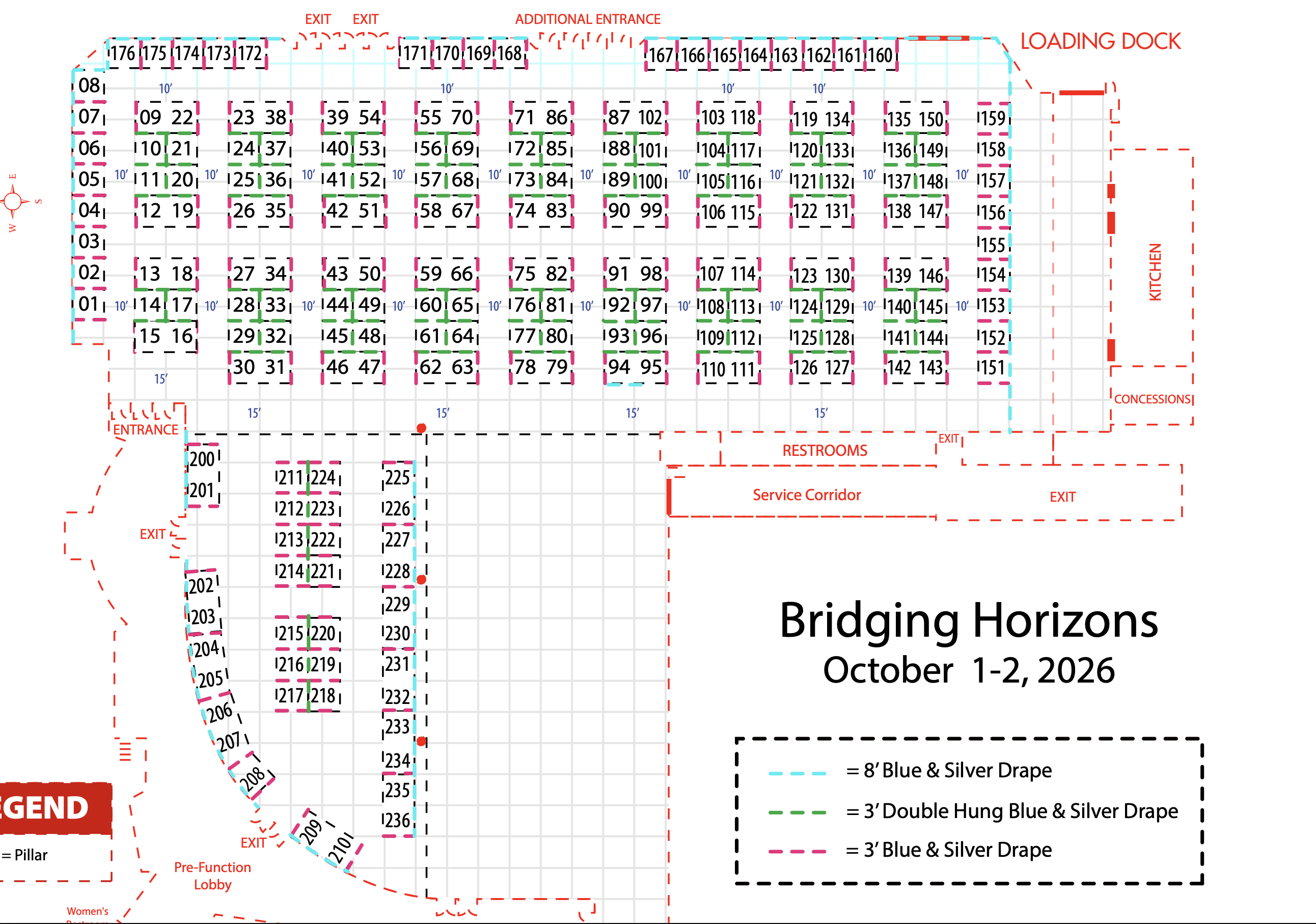
Saved booths stay in this browser on your device. Assignments may change; visit the BH fair Help Desk at booths 15–16 or the Main Help Desk in the main lobby between Halls 2 and 3 for assistance.
Tap a numbered booth to see its exhibitor. On a phone, scroll the map sideways and vertically. Use “Show on map” below to jump to a booth. Entrances and restrooms are labeled on the supplied layout.
Main Hall: booths 1–176. Art Gallery: booths 200–210 along the curved lobby wall. Community Marketplace: booths 211–236 in the pre-function lobby. The main entrance connects the lobby to the Main Hall.
No matching exhibitors. Try a name or booth number, select “All areas,” or turn off “My booths to visit.”
CONTINUING EDUCATION
14 presentations are listed as CEs offered. Four others are under review and are not confirmed for credit.
Credit hours, eligible credential types, certificate steps, and deadlines have not been provided. A session’s duration is not its confirmed CE award. A session without a badge is not necessarily ineligible; check the complete CE list below.
Kimberly Lavelanet · BEHAVRIUM Health Services
Day 1 · Oct. 1 · 10:00–11:00 AM · Room 2005 ↓Krystall Rollins, MSW · Department of Developmental Services (DDS), Service and Workforce Development Branch
Co-presenter(s): Julian Elliott & Erica Graff
Day 1 · Oct. 1 · 10:00–11:00 AM · Room 2016 ↓Nick Lutton · California State Council on Developmental Disabilities
CE listing format: Half-Day Training. Confirm required attendance for this training at registration.
Co-presenter(s): Officer Denton, Fresno Police Department
Day 1 · Oct. 1 · 3:45–5:45 PM · Room 2012 ↓Veronica Magallanes · State Council on Developmental Disabilities
Day 2 · Oct. 2 · 10:00–11:00 AM · Room 2008 ↓Veronica Magallanes · State Council on Developmental Disabilities
Day 2 · Oct. 2 · 1:30–2:30 PM · Room 2016 ↓Michelle Smith · Pathways to Change
Co-presenter(s): Dawn Purdy
Day 2 · Oct. 2 · 2:45–3:45 PM · Room 2004 ↓Scott Johnston · N/A
Co-presenter(s): Nathan Todd, Dr. Michelle Fynan
Day 2 · Oct. 2 · 2:45–3:45 PM · Room 2003 ↓Yenifer Gallegos-Mejia · YAI-CA START Central Valley
Co-presenter(s): Evelyn Espinoza
Day 2 · Oct. 2 · 1:30–2:30 PM · Room 2008 ↓Hilario · Sober State, LLC
Day 1 · Oct. 1 · 2:30–3:30 PM · Room 2001 ↓Maria Sandoval · CalABLE - California Achieving a Better Life Experience (CalABLE) Program
Co-presenter(s): Thomas Martin (back up)
Day 2 · Oct. 2 · 1:30–2:30 PM · Room 2002 ↓Susan Lopez · Kalos Specialized Services
Co-presenter(s): Lisa Martinez
Day 2 · Oct. 2 · 11:15 AM–12:15 PM · Room 2003 ↓Scheduled as: ¡Vive Mejor Vida! Tus Metas, Tu Independencia, a Tu Manera!
Natasha Ambriz · CVRC
Day 1 · Oct. 1 · 2:30–3:30 PM · Room 2005 ↓Meagan Barrientos and Laura Sanchez · Central Unified School District
Co-presenter(s): Meagan Barrientos and Laura Sanchez
Day 2 · Oct. 2 · 11:15 AM–12:15 PM · Room 2010 ↓Scheduled as: Life Transitions (ATP to Beyond)
Jade Riggins · Vocation Plus Connections, Inc. (VPCI)
CE listing format: Multi-session Training. Confirm required attendance for this training at registration.
Day 1 · Oct. 1 · 2:30–3:30 PM · Room 2004 ↓These presentations are still being reviewed. Do not count them toward CE requirements until approval is confirmed.
Saralynn E. Keenan · San Diego Regional Center
Day 1 · Oct. 1 · 10:00–11:00 AM · Room 2001 ↓Dr. Amy Kaufman · MARS Group
Co-presenter(s): Jessica Pence and Maria Perez-Orenelas
Day 1 · Oct. 1 · 2:30–3:30 PM · Room 2002 ↓Gabriel Ruiz Knabb · Central Valley Regional Center
Day 1 · Oct. 1 · 3:45–4:45 PM · Room 2004 ↓Julie Beadle-Brown · California Community Living Network
Day 1 · Oct. 1 · 10:00–11:00 AM · Room 2003 ↓CE statuses and presenter information are from the conference organizer’s supplied CE list. CE listing titles are retained to make cross-checking easier. Scheduled titles and times remain as shown in the daily guide.
KEEP THE ORIGINALS HANDY
Save the PDFs on your phone before you arrive. Files open below; use your browser’s download or save option to keep an offline copy.
SHARE YOUR CONFERENCE MOMENTS
TAG US ON SOCIAL MEDIA
We’d love to see your conference photos! Tag us on Instagram and use our conference hashtag.
@bridginghorizonsconference
#BridgingHorizon2026
Take the post-event survey & view the gallery →
Conference announcements →